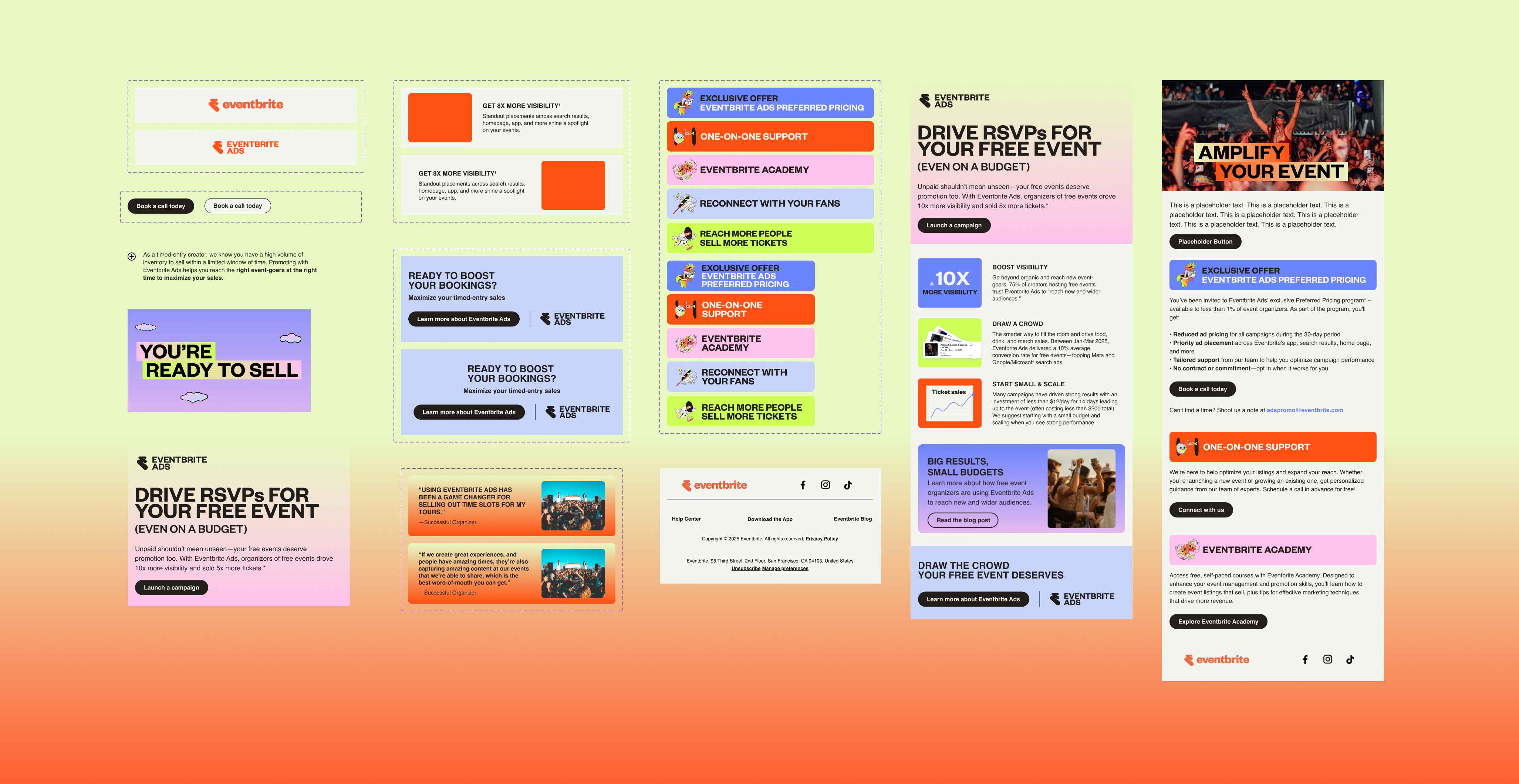
A Brand Redesign with a Functional Gap
Following Eventbrite's major brand redesign, the Lifecycle Marketing team faced a critical bottleneck. The new brand manual provided only a few static examples of email layouts, lacking the comprehensive guidelines needed for daily, high-volume campaign execution. My objective was to translate these high-level brand aesthetics into a functional, scalable, and technically sound email system that the marketing team could use autonomously.
Research & Discovery: Defining the Minimum Viable System
Before designing a single component, I conducted a comprehensive audit of existing email communications. To set a high benchmark, I analyzed the lifecycle strategies of platforms like Airbnb and AllTrails. This comparative analysis allowed me to identify repetitive patterns and define a minimum viable set of modular components required to build 90% of daily campaigns.
Technical Constraints & Cross-Platform Engineering
Designing for email is notoriously restrictive compared to standard web design. I had to architect a system that survived legacy email clients while maintaining brand integrity. Key constraints I solved:
- Typography Fallbacks
Helvetica as a universally legible web-safe font for body copy across all email clients, reserving custom institutional typography strictly for headings or image-based modules.
- Dark Mode Adaptability
Every component and color token was engineered to invert cleanly and maintain WCAG contrast standards across mobile devices configured to Dark Mode.
- Live Text vs. Image Assets
Clear rules for when to use live HTML text versus exported JPG assets — balancing strict brand guidelines (specific rounded corners) with deliverability and responsiveness.
- Responsive Hero Images
Standardized Hero sizing with logic for desktop/mobile image swaps versus a single optimized "in-between" aspect ratio to reduce asset production time.
The Core Feature: Dynamic Event Listing Block
Eventbrite's core value is connecting people to local experiences. I designed an "Event Block" — containing an image, date, duration, and address — that visually mirrored the listings built by the Product Design team, ensuring a seamless user journey from email to platform. I collaborated directly with a technical specialist to ensure data variables mapped correctly to the CRM and populated dynamically per user.
Implementation: Building into Braze Natively
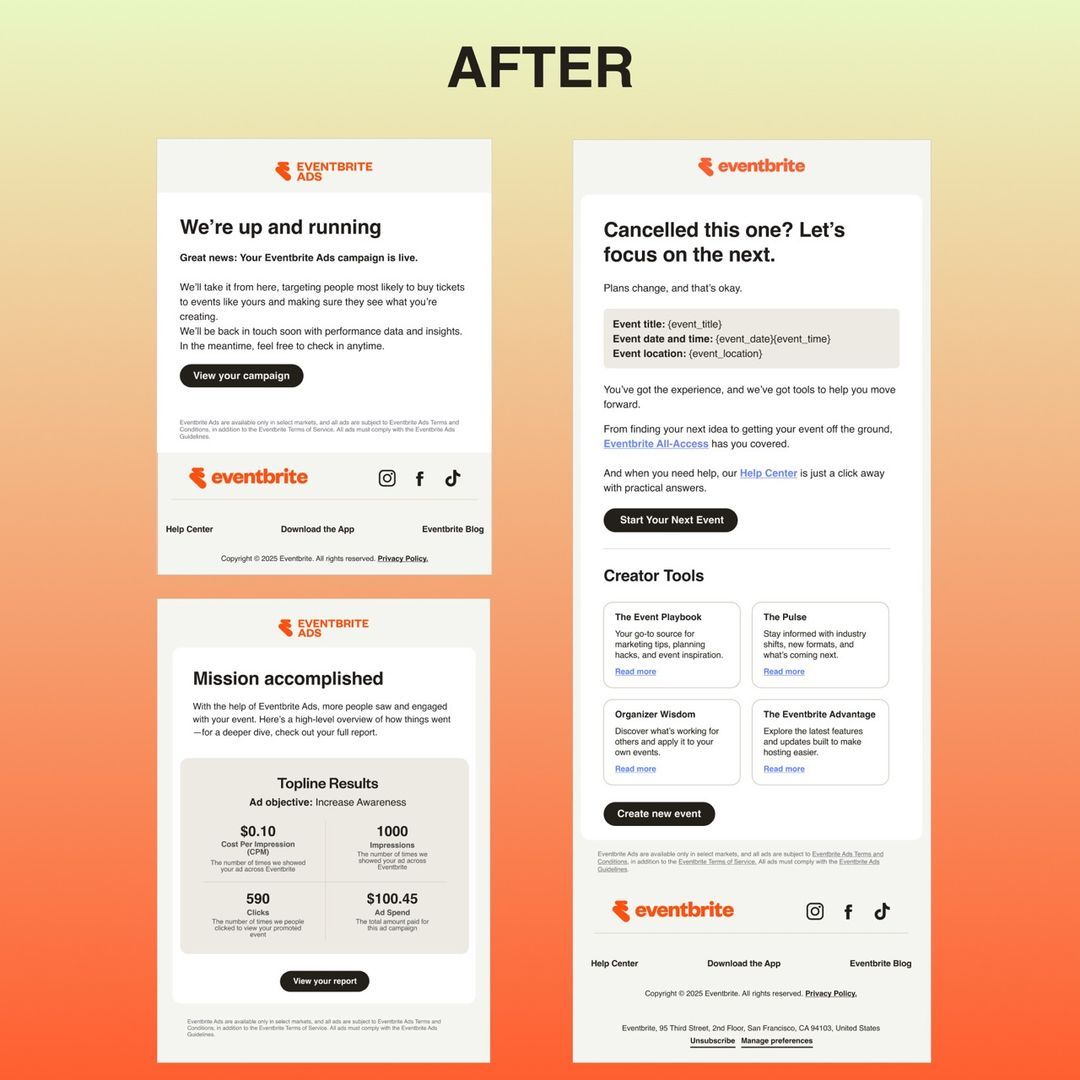
Rather than just delivering Figma files, my focus was seamless integration. I built and configured all reusable components directly into Braze's Drag & Drop editor, saving them as a native modular library for the Lifecycle Marketing team — enabling non-designers to autonomously assemble, modify, and launch brand-compliant emails, completely removing the design bottleneck.
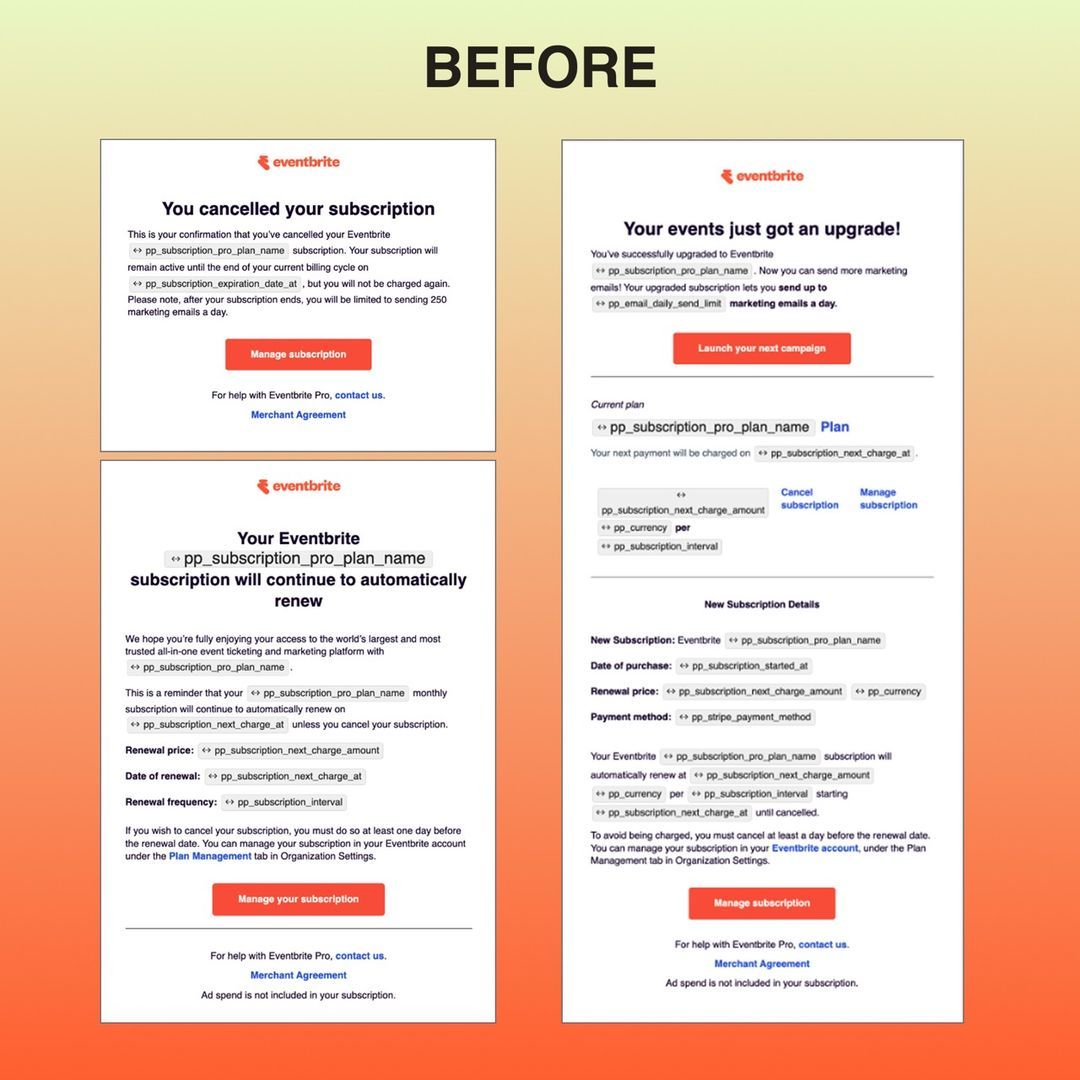
Transformation
Drag to compare
Impact
30%
Reduction in campaign production time
Time-to-market dropped significantly after system rollout.
90%
Of daily campaigns covered
Minimum viable component set handles the full campaign range.
0
Design bottleneck
Non-designers ship brand-compliant emails autonomously.